
Outline vs full planning permission
Full planning permission decides every detail of a scheme - layout, scale, appearance, access and landscaping - at the point of decision. Outline planning permission establishes only the principle that development is acceptable, leaving those "reserved matters" for a later, separate application.
GapSense assesses your site against your council's local plan and the national framework to show whether the principle of development is likely to succeed - before you spend on a full application. No card needed.
General guidance, not advice. This guide explains how UK planning law works in general terms. It is not legal or planning advice for your specific site, and the law changes over time and differs between England and Wales. Check the current rules with your local planning authority or a qualified planning professional before you act.
Most planning applications in England and Wales are either full or outline (outline permission is only available for development that involves building or other operations, not a change of use on its own, and other types exist such as reserved matters, householder and section 73 applications). The difference is not a technicality: it changes how much you must design up front, what the council is deciding, how much you pay, how long the consent lasts, and how much risk you carry into a second stage. The two routes are defined in sections 91 and 92 of the Town and Country Planning Act 1990, which set the time limits, and in the development management procedure orders that define what can be reserved.
What full planning permission is
Full planning permission is the default route. The local planning authority decides every aspect of the proposed development in a single determination, and the application must particularise the layout, scale, appearance, access arrangements and landscaping. Nothing of substance is left for later. Once granted, you can build the scheme as approved (subject to conditions) without needing a further planning application for the detail.
The time limit is set by section 91 of the Town and Country Planning Act 1990. Development must be begun before the end of the "applicable period": three years in England (s.91(5)(a)) and five years in Wales (s.91(5)(b)), running from the date permission is granted. If no time condition is imposed, the three-year (England) or five-year (Wales) period is deemed to apply automatically (s.91(3)). The authority can direct a longer or shorter period under s.91(1)(b), so always check the decision notice. See our how long does planning permission last guide for the full picture on time limits and what "beginning development" actually requires.
What outline planning permission is
Outline planning permission establishes only the principle that development of the kind proposed is acceptable on the site. The detailed matters are deliberately left for a second, later application. Section 92(1) of the 1990 Act defines it as permission granted "with the reservation for subsequent approval ... of matters not particularised in the application" - those reserved matters.
Because only the principle is decided, the application can be made with far less design work. Many outline submissions include only an indicative layout and a parameters plan (maximum heights, densities, floorspace) rather than fixed designs. That is the point of the route: it lets you find out whether the council accepts development on the site at all, before committing to the cost of a fully designed scheme. It is also why outline is the common route for strategic land, option agreements and sites where the principle is genuinely contested.
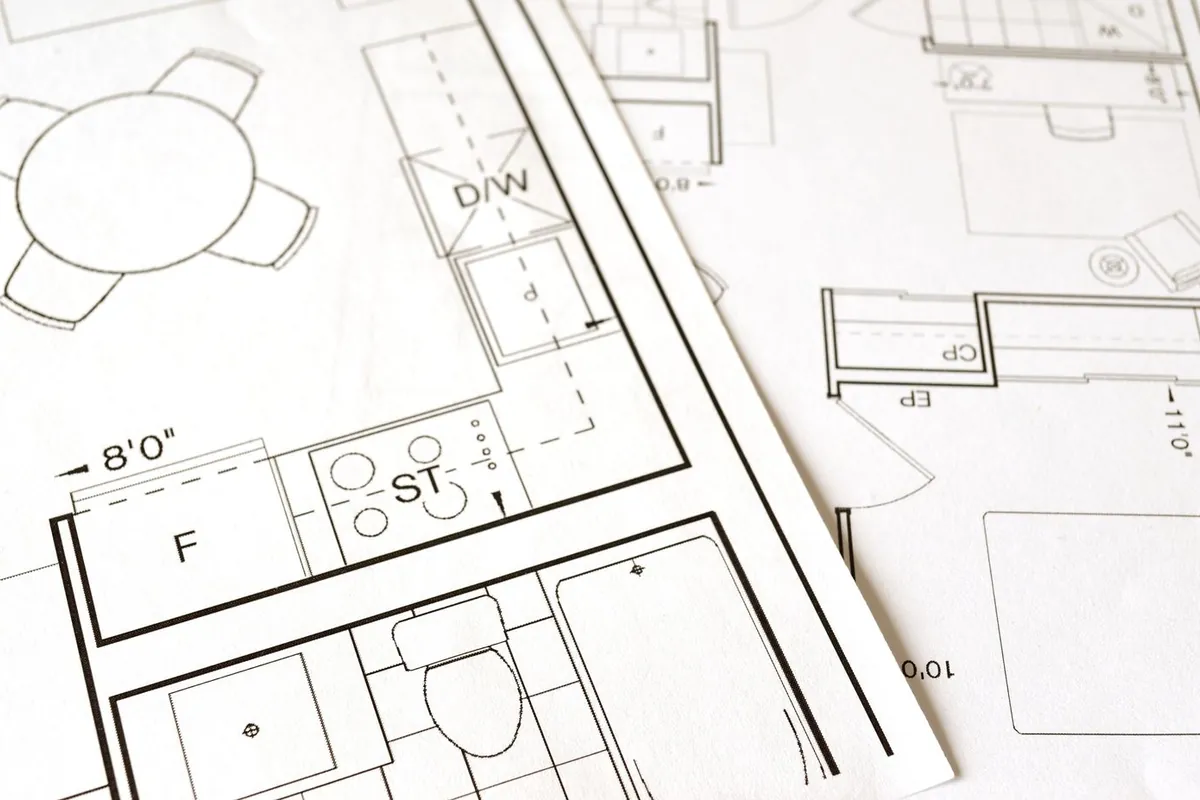
The reserved matters: what gets decided later
In England the reserved matters are set out in the Development Management Procedure Order and are:
- Layout - the way buildings, routes and open spaces are arranged within the site.
- Scale - the height, width and length of each building in relation to its surroundings.
- Appearance - the external look: materials, fenestration and architectural treatment.
- Access - how vehicles and people reach and move through the site.
- Landscaping - the treatment of public and private open space, planting and boundaries.
You do not have to reserve all five. In England you can choose to detail one or more (commonly access) in the outline application itself, so that only the remainder are decided at the reserved-matters stage. Wales uses a comparable list under its own development management order.
After outline permission is granted, you submit one or more reserved matters applications to get the council's approval on those details. Section 92(2)(a) sets a single hard deadline that applies in both England and Wales: an application for approval of any reserved matter must be made within three years of the date the outline permission was granted. Miss that window and the entire outline consent becomes unimplementable - development cannot lawfully begin until all reserved matters are approved, so a missed deadline for even one of them brings down the whole consent, not just that matter.
When to use outline (and when to use full)
Use outline when:
- you want to test the principle of development on a contentious or strategic site before spending on detailed design - Green Belt edges, allocation boundaries, or sites where local-plan policy is contested;
- you are phasing a large scheme and want to lock in the principle early, then bring forward detailed parcels over time;
- you intend to sell the land with a consent in place - a promoter or buyer often values the principle being established while keeping control of the detail.
Use full when:
- you are ready to build and want to start as soon as permission is issued;
- you want cost certainty - a full application forces you to fix the design, so construction pricing is meaningful;
- the scheme is small or straightforward and a two-step process is not worth the extra time.
There is a strategic angle too. An outline application lets you discover whether the council accepts development on the site at all, at lower cost and risk than a full submission. If the answer is no, you have saved the cost of detailed design. Pre-application advice can do some of the same work even more cheaply, but it is not a binding decision - outline is.
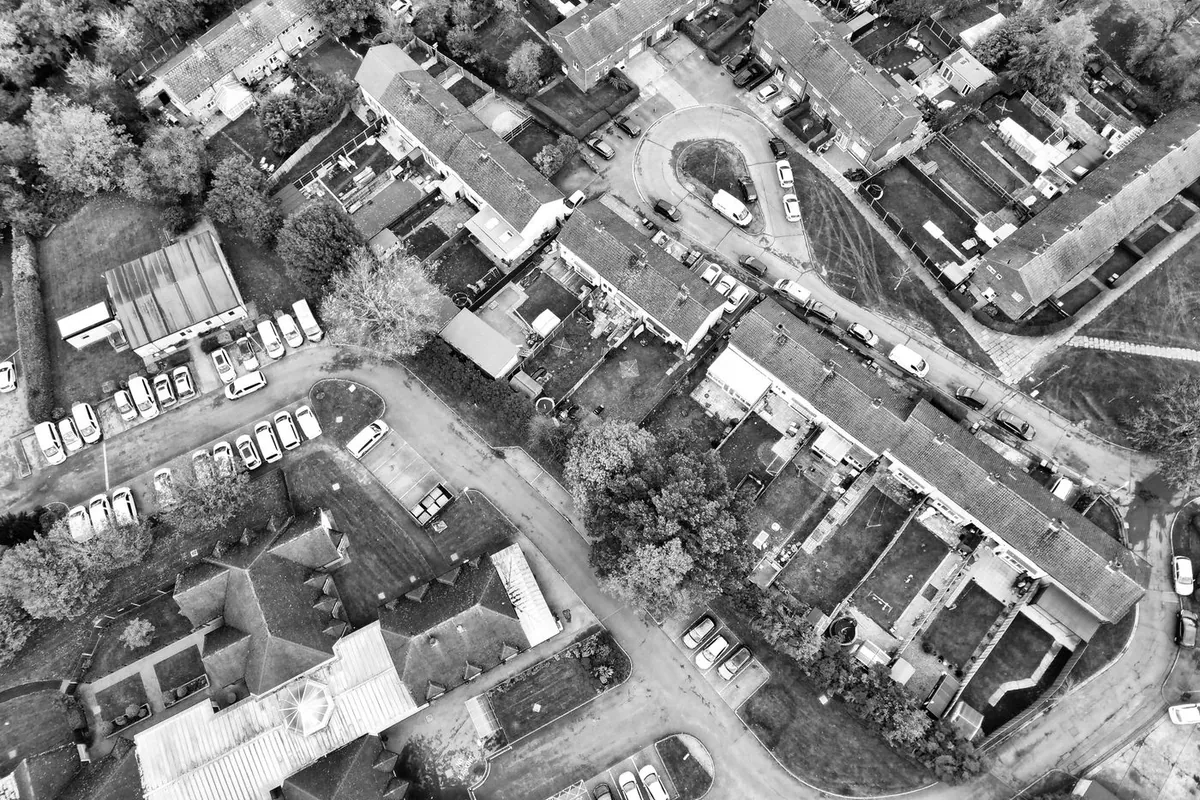
The time and cost trade-off
Outline is cheaper to prepare, because less design work is needed. The application fee is not always lower, however: in both England and Wales outline fees are calculated on the site area under the current fee regulations, so outline is not categorically cheaper than full. It depends on the scheme - for a high-density residential site the outline fee per hectare can be lower than the full fee per dwelling, while for a low-density site it can be higher. It is also typically faster to a decision, because there is less detail for the council to assess and consult on. But it does not give you a buildable consent. You will pay a second application fee for the reserved matters, wait for a second determination, and the total elapsed time from outline to a consent you can actually build from is usually longer than a single full application.
The risk is asymmetric, and that matters for the choice. A full approval is, subject to conditions, a green light to build. An outline approval is only the first half of a two-stage process, and the second half can still go wrong.
How long each permission lasts
The implementation periods are set by sections 91 and 92 of the 1990 Act and differ between England and Wales.
- Full permission (s.91): development must begin within three years in England, or five years in Wales, of the grant of permission.
- Outline permission (s.92): the reserved matters application must be submitted within three years of the outline grant (England and Wales alike); then
- in England, development must begin within two years of the final approval of the reserved matters (s.92(2)(b));
- in Wales, development must begin no later than the later of five years from the outline grant, or two years from the final reserved-matters approval (s.92(2)(c)).
The Wales position is the more generous one. There is a five-year outer clock running from the date of the outline grant that applies regardless of when the reserved matters are approved. In England, once the reserved matters are approved you have a fixed two years to start - even if you secured outline approval only weeks earlier. So a Welsh developer who submits and approves reserved matters quickly still gets the full five years from the outline grant; an English developer in the same position gets only two years from approval.
In both jurisdictions the authority can direct longer or shorter periods under s.92(4) and s.91(1)(b), so read the conditions on the decision notice rather than assuming the statutory default. Our guide to how long planning permission lasts covers these time limits and what counts as "beginning development" in more detail.
Can you go straight to full - or convert outline to full?
You can always apply for full planning permission directly; outline is never compulsory. For most small or one-off schemes that is exactly what people do, and it is the only route that gives a buildable consent in a single step.
If you already have outline permission, you cannot simply "convert" it into a full permission by asking the council. The established route is to submit a new full application on the same site. Because the principle has already been agreed at outline stage, a consistent full application will usually be granted - but it is a fresh determination, and the council is entitled to assess the detailed matters, and any change in material considerations, afresh. A section 73 application can also be used to vary or remove conditions on an existing permission, including moving from one set of approved details to another, but it does not bypass the need for the detail itself to be acceptable.
The risk: principle agreed does not guarantee the details
This is the single most important thing to understand about outline consent. An outline approval says "development of this kind is acceptable in principle". It does not say "your layout, height, appearance and access will be approved". The reserved matters are judged against the policies and material considerations in force at the time they are determined, and the council can refuse them - particularly if the indicative layout shown at outline stage turns out not to be achievable, or if local policy has moved on between the two determinations.
The National Planning Policy Framework (August 2026) reflects exactly this caveat in its treatment of housing land supply. Its glossary at Annex B defines a site with outline planning permission for major development as "deliverable" only "where there is clear evidence that homes will be delivered on-site within five years" - an outline consent with no realistic route to reserved-matters approval is, in land-supply terms, not yet a deliverable site. Planning Policy Wales (Edition 12) goes further in one specific case: for enabling development that funds the conservation of a historic asset, it states permission "should be granted only where ... the impact of the development was precisely defined in the application at the outset, and normally through the granting of full, rather than outline, planning permission" (para 6.1.32) - a rare express policy preference for full over outline where the impacts need to be nailed down.
What to do for your site
The choice comes down to how much certainty you need now versus how much risk you are willing to carry into a second stage:
- if the principle is genuinely in question, outline (or pre-application advice) lets you test it cheaply before committing to design fees;
- if you are ready to build, need pricing certainty, or the scheme is modest, go full;
- if you are selling the land, an outline consent often maximises value with the least design risk carried by you.
GapSense screens your site against your council's local plan and the relevant national framework - the NPPF in England, Planning Policy Wales in Wales - and reports whether the principle of development is likely to succeed, and which route, outline or full, is the stronger one to take, before you pay for an application.
Disclaimer: this guide is general information, not legal or planning advice, and reading it does not create any professional relationship. Planning law and national policy change, and vary between England and Wales. Always confirm the current position with the relevant legislation, your local planning authority, or a qualified planning consultant before making a decision.
Sources: the Town and Country Planning Act 1990 (sections 91 and 92), the National Planning Policy Framework (August 2026), and Planning Policy Wales (Edition 12). Time periods reflect the consolidated legislation as at August 2026; always check the live legislation and your council's local position.
Pick the right application route for your site.
GapSense screens your site against the policies that will decide it, and whether outline or full is the stronger route, before you apply. No card needed.