
Class Q permitted development: barns to homes
Class Q is an England-only permitted-development route that lets you convert an existing agricultural building into a dwellinghouse under prior approval rather than full planning permission - provided the unit has been in agricultural use long enough and the size limits are respected.
GapSense reads the Class Q conditions and the prior-approval tests and tells you whether your barn conversion qualifies before you notify the council. No card needed.
General guidance, not advice. This guide explains how UK planning law works in general terms. It is not legal or planning advice for your specific site, and the law changes over time and differs between England and Wales. Check the current rules with your local planning authority or a qualified planning professional before you act.
Class Q is a permitted-development right set out in Schedule 2, Part 3, Class Q of the Town and Country Planning (General Permitted Development) (England) Order 2015 (the "GPDO 2015"). It lets you change the use of an agricultural building to a dwellinghouse without applying for full planning permission. Instead, you seek the local planning authority's prior approval on a short, fixed list of matters. The right was substantially amended in 2024 to raise the number of dwellings and the total floor space it allows, while capping each individual dwelling at 150 square metres.
Paragraph Q of the GPDO covers three linked types of development:
- Q(a) - the change of use itself, from a building that is part of an established agricultural unit (or a former agricultural building) to a use within Class C3 (dwellinghouses) of the Use Classes Order.
- Q(b) - the change of use together with an extension of the building.
- Q(c) - the change of use together with the building operations reasonably necessary to convert the building to a dwellinghouse (or to extend it).
Class Q is available in two situations: a building that is part of an established agricultural unit, and a "former agricultural building" that was - but is no longer - part of such a unit. It is an England-only right; Wales's position is covered below.
The 10-year agricultural use rule
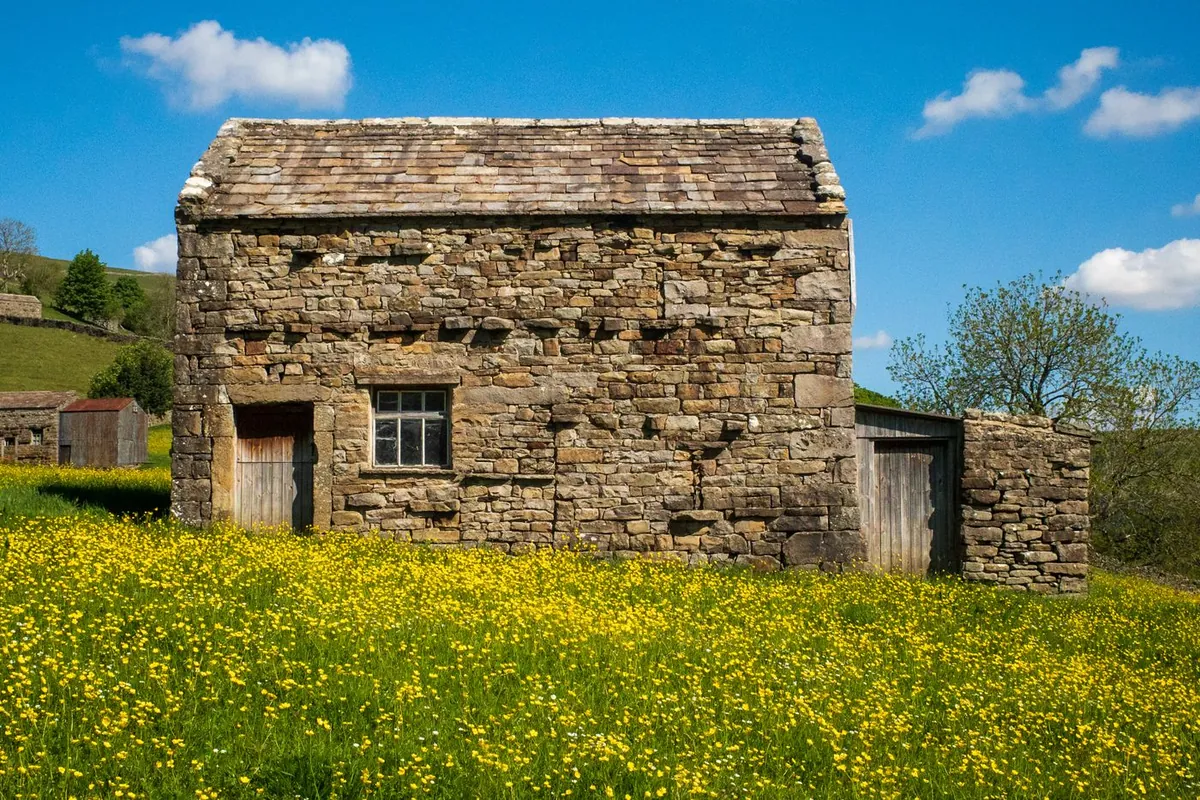
The building must have a genuine agricultural pedigree. Paragraph Q.1 sets out when development is not permitted, and the first gates are about how long the site has been in agricultural use.
For a site that is still part of an established agricultural unit, development is not permitted unless (Q.1(a)):
- the site was part of the established agricultural unit on 24 July 2023; or
- where the site became part of the unit after 24 July 2023, it has been part of it for at least 10 years before the Class Q development begins.
For a former agricultural building - one that was but is no longer part of an established unit - the tests are similar but stricter (Q.1(b)). The site must have been part of the unit on 24 July 2023, or if it ceased after that date it must have been part of the unit for at least 10 years; and, crucially, since ceasing to be agricultural it must not have been used for any non-agricultural purpose at all.
A related exclusion sits at Q.1(g): if new agricultural buildings or operations have been carried out on the unit under Part 6 Class A(a) or Class B(a) in the 10 years before the Class Q development begins, Class Q is not available. This stops a landowner erecting a fresh agricultural barn and immediately converting it.
The cumulative limits: dwellings, floor space and building size
The 2024 amendments doubled the dwelling limit (from 5 to 10) and raised the cumulative floor-space limit from 865 to 1,000 square metres, while capping each individual dwelling at 150 square metres. The current limits, in Q.1(c) and Q.1(d), are:
- Each individual dwellinghouse created under Class Q must not exceed 150 square metres of floor space (Q.1(c)).
- The cumulative number of separate dwellinghouses created under Class Q within the original limits of the established agricultural unit must not exceed 10 (Q.1(d)(i)).
- The cumulative floor space of all Class Q dwellinghouses within the unit must not exceed 1,000 square metres (Q.1(d)(ii)).
So you could create up to 10 dwellings of 100 sqm each, or fewer larger dwellings up to the 150 sqm per-dwelling cap and the 1,000 sqm total. These caps are shared across the whole agricultural unit - they are not per application. The "original limits of an established agricultural unit" are defined in Q.3(2). When you apply, paragraph W(2)(bb) requires you to state the number of dwellings proposed and whether previous Class Q development has already taken place within the unit, including the number and cumulative floor space.
The building operations themselves are tightly constrained. Q.1(j) limits Class Q(c) operations to:
- the installation or replacement of windows, doors, roofs, or exterior walls, or of water, drainage, electricity, gas or other services, to the extent reasonably necessary for the building to function as a dwellinghouse; and
- partial demolition to the extent reasonably necessary to carry out those works.
Anything beyond that - a substantial rebuild, a new wing that is not an extension under Q(b) - falls outside Class Q. If you are also extending under Q(b), Q.1(h) and Q.1(i) impose further limits: the extension must not extend beyond the existing building's external dimensions (except for small protrusions up to 0.2 metres for the permitted building operations), must be single-storey, sited to the rear, must extend no more than 4 metres beyond the rear wall, and must not exceed the existing eaves height or the lower of the existing roof ridge or 4 metres. The converted building must also meet the nationally described space standard (Q.1(o)) and have suitable existing access to a public highway (Q.1(p)).
What Class Q does NOT permit
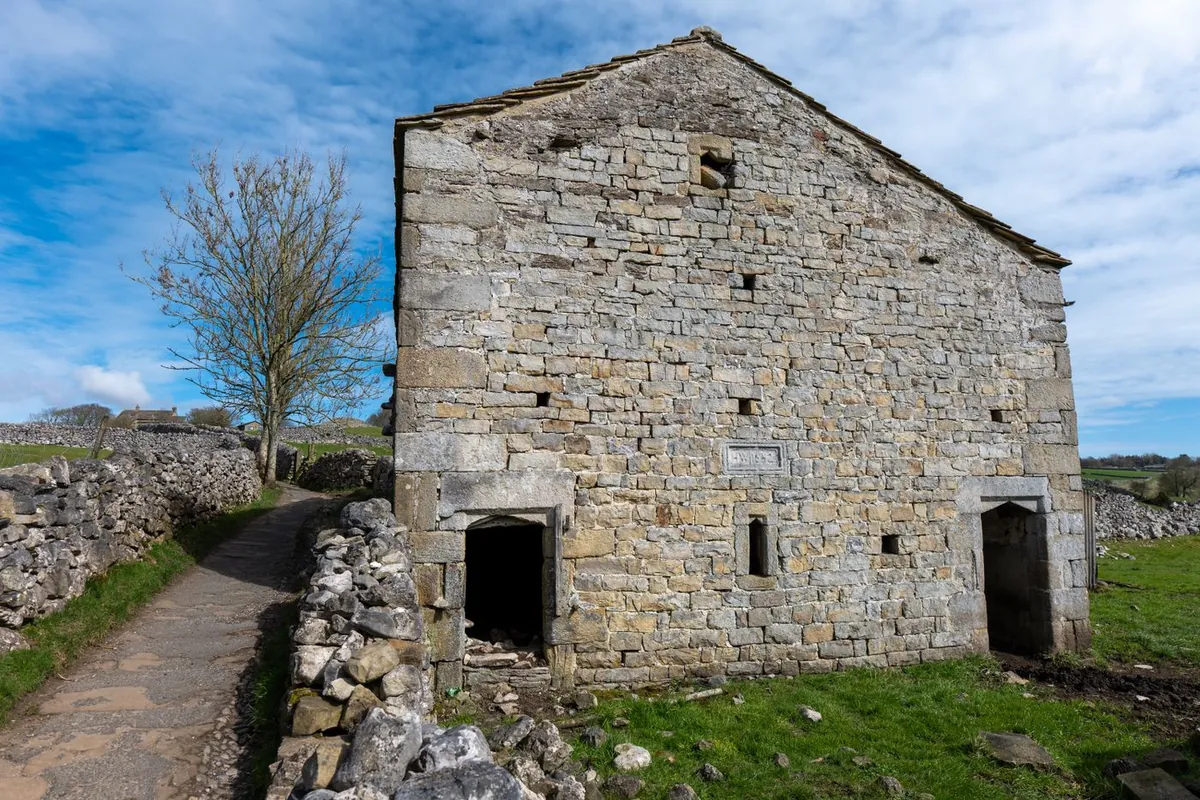
A number of sites and buildings are excluded outright (Q.1(k) to (n)):
- Article 2(3) land - land within a National Park, an Area of Outstanding Natural Beauty (now a National Landscape), a conservation area, the Broads, land notified under section 41(3) of the Wildlife and Countryside Act 1981, or a World Heritage Site (Q.1(k)). A barn inside a conservation area is therefore excluded from Class Q.
- Sites of Special Scientific Interest, safety hazard areas, and military explosives storage areas (Q.1(l)).
- Scheduled monuments (Q.1(m)).
- Listed buildings (Q.1(n)).
Agricultural tenancies are also protected. Development is not permitted if the site is occupied under an agricultural tenancy unless both landlord and tenant have given express consent (Q.1(e)); and if a tenancy was terminated less than a year before the development begins and the termination was for the purpose of carrying out Class Q development, it is not permitted unless both parties agreed in writing that the site was no longer required for agricultural use (Q.1(f)).
The prior approval process and the 56-day window
Class Q is not "permission you can just start". Paragraph Q.2 makes the right subject to a prior-approval condition: before beginning the development you must apply to the local planning authority for a determination as to whether its prior approval is needed on a defined list of matters.
For a change of use together with building operations (Q(a) plus Q(c)), the matters the LPA can consider are (Q.2(1)):
- transport and highways impacts of the development;
- noise impacts of the development;
- contamination risks on the site;
- flooding risks on the site;
- whether the location or siting of the building makes it otherwise impractical or undesirable for it to change from agricultural use to a dwellinghouse;
- the design or external appearance of the building; and
- the provision of adequate natural light in all habitable rooms of the dwellinghouses.
For a change of use only (Q(a) alone), the design-and-appearance matter drops out - the LPA considers transport, noise, contamination, flooding, location/siting, and natural light (Q.2(2)). If an extension is included (Q(b)), the LPA also considers the impact of the extension on the amenity of any adjoining premises (Q.2(3)).
The procedure is governed by paragraph W of Part 3. The application must include a written description of the development, a site plan, a statement of the net increase in dwellinghouses, a floor plan with the floor space and dimensions of each dwellinghouse, and - specifically for Class Q - a statement of the number of dwellings proposed and whether previous Class Q development has taken place within the unit (W(2)). Where flooding is in play and the site is in Flood Zone 2 or 3, the LPA must consult the Environment Agency (W(6)); for transport it must consult the highway authority where relevant (W(5)). The LPA must publicise the application by site notice or neighbour notice for at least 21 days (W(8)).
The 56-day window is the key mechanic. Under W(11), development must not begin before one of three things happens: the LPA gives written notice that prior approval is not required; the LPA gives written notice granting prior approval; or 56 days expire from receipt of the application without the LPA notifying you either way. If the 56 days run out in silence, you can proceed in accordance with the details in your application (W(12)) - this is the "deemed prior approval" route. If the LPA refuses - for example because it decides the location is impractical for a dwelling, or that adequate natural light cannot be provided - you have a right of appeal under section 78 of the Town and Country Planning Act 1990.
Once prior approval is given (or deemed), the development must be completed within 3 years of the prior approval date (Q.2(4)).
Wales: no Class Q, so you need planning permission
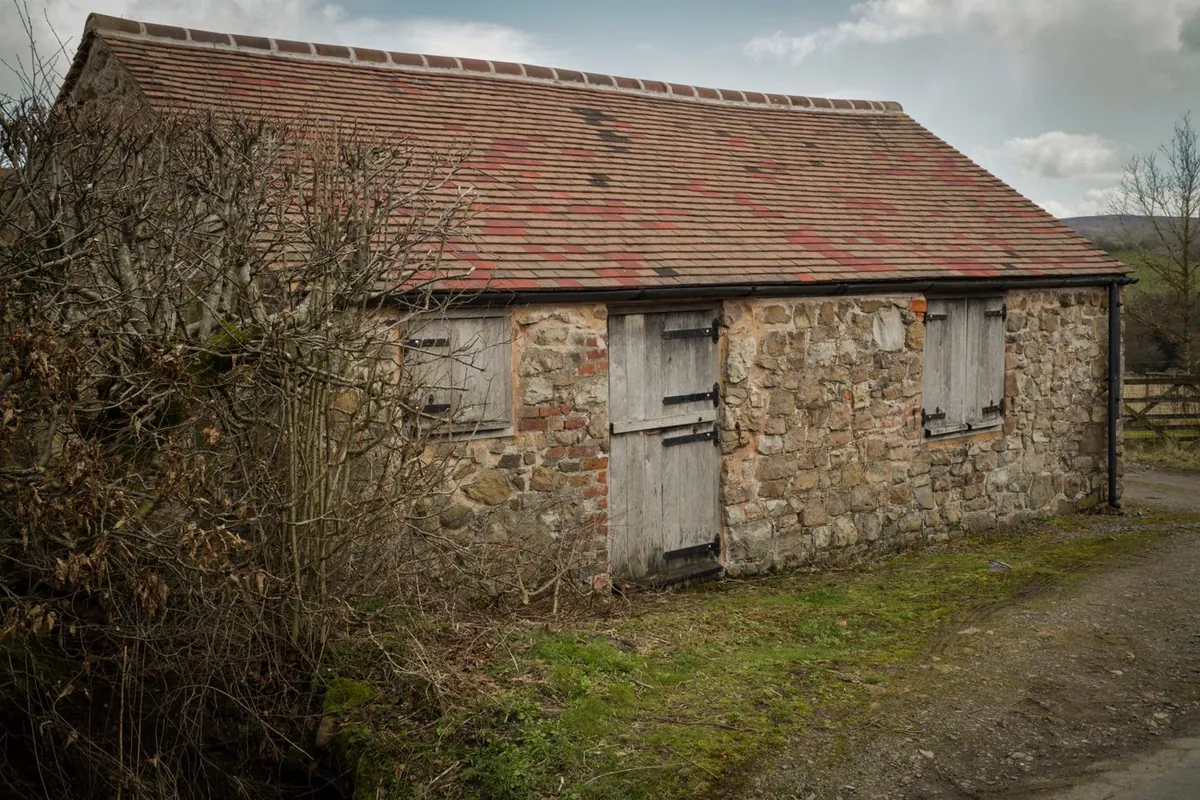
Class Q is an England-only right, and Wales has no equivalent. Agricultural permitted development in Wales is governed by the older Town and Country Planning (General Permitted Development) Order 1995, Schedule 2, Part 6 - and Part 6 covers agricultural buildings and operations only, not changes of use to dwellings.
Class A of Part 6 (units of 5 hectares or more) lets you erect, extend or alter an agricultural building and carry out related works; Class B (units of 0.4 to 5 hectares) is narrower and permits only the extension or alteration of an existing agricultural building. But Part 6 explicitly excludes dwellings: Class A.1(b) provides that development is not permitted if it "would consist of, or include, the erection, extension or alteration of a dwelling", and Class B.2(d) provides that it is not permitted if it "would involve the extension, alteration or provision of a dwelling". The Welsh definition of "agricultural land" also excludes any dwellinghouse or garden. There is no Welsh class that converts an agricultural barn to a Class C3 dwellinghouse under prior approval.
So in Wales, a barn conversion to a home needs a planning application - typically a full planning application for the change of use together with the operational development. (A householder application only fits where the barn is within the curtilage of an existing dwelling, which a working agricultural barn usually is not.) The local planning authority will assess it against Planning Policy Wales, the local development plan, and the usual material considerations. There is no 56-day prior-approval shortcut, and the GPDO 2015 size caps do not apply.
Nutrient neutrality: the rural-site catch
Because Class Q barns are by nature rural, one issue increasingly trips them up even where the GPDO tests are met: nutrient neutrality. In catchments sensitive to phosphate or nitrogen pollution - many of them in England, and a growing number in Wales - a new dwelling can add wastewater nutrient load to a protected habitat, and the LPA (advised by Natural England or Natural Resources Wales) may require mitigation that demonstrates nutrient neutrality before development can proceed. This applies to planning applications, and in affected catchments it can bite on prior-approval routes too. The duty does not come from the Class Q prior-approval matters (which are a closed list) but from the Conservation of Habitats and Species Regulations 2017: the LPA, as the competent authority, must carry out an appropriate assessment before granting any consent - including a Class Q prior approval - that could harm a protected habitat, regardless of what the GPDO list covers.
Before you commit to a Class Q prior-approval application, check whether the site is in a nutrient-neutrality catchment. Our nutrient neutrality calculator takes a postcode and tells you whether the site falls in a phosphate or nitrogen catchment, so you know up front whether mitigation is going to be part of the conversation.
What to do before you notify the council
The most common reasons a Class Q barn conversion fails are evidential, not technical: the 10-year agricultural use cannot be proven, the building has picked up a non-agricultural use in the interim, the proposed works go beyond the permitted building operations, or the cumulative caps are already partly used. Before you file a prior-approval application, gather evidence of the unit's agricultural use over the relevant period (tenancy records, agri-environment scheme entries, livestock records, utility usage), measure the existing building and the proposed floor space against the 150 sqm per-dwelling and 1,000 sqm cumulative caps, and check the Use Classes Order position - Class Q delivers a C3 dwellinghouse, and if you intend a different residential form the right may not help you.
If the 10-year use is genuinely established but you cannot yet prove it, or the council is likely to dispute it, a lawful development certificate for the established use can be a useful precursor. And if the site is in a sensitive catchment, run the nutrient check first so mitigation is designed in, not bolted on after a refusal.
Disclaimer: this guide is general information, not legal or planning advice, and reading it does not create any professional relationship. Planning law and national policy change, and vary between England and Wales. Always confirm the current position with the relevant legislation, your local planning authority, or a qualified planning consultant before making a decision.
Sources: the Town and Country Planning (General Permitted Development) (England) Order 2015 (Schedule 2, Part 3, Class Q and paragraph W) and the Town and Country Planning (General Permitted Development) Order 1995 (Schedule 2, Part 6) for Wales. Limits reflect the consolidated legislation as at July 2026; always check the live legislation and your council's local position.
Check your agricultural building's Class Q eligibility.
GapSense reads the Class Q conditions and the prior-approval tests, and tells you whether your barn conversion qualifies before you notify the council. No card needed.