
The Use Classes Order
The Use Classes Order sorts land and building uses into numbered classes. A change of use within the same class is not development, so it needs no planning permission; a move to a different class may.
GapSense screens your change of use against the Use Classes Order, Class MA and the GPDO prior-approval routes, and tells you the cleanest permission route - or if you need one at all. No card needed.
General guidance, not advice. This guide explains how UK planning law works in general terms. It is not legal or planning advice for your specific site, and the law changes over time and differs between England and Wales. Check the current rules with your local planning authority or a qualified planning professional before you act.
What the Use Classes Order is
The Use Classes Order is a statutory instrument made under what is now section 55 of the Town and Country Planning Act 1990. It sorts the use of land and buildings into numbered classes. The core rule sits in article 3 of the Order: where a building is used for a purpose within a class, using it for any other purpose in the same class "is not to be taken to involve development". Because planning permission is only needed for "development" (section 57 of the 1990 Act), a same-class change of use needs no application.
That is the whole point of the Order. It lets a shop become an estate agency, or a light industrial unit become an office, without a planning application, so long as both uses sit in the same class. Move to a different class, though, or to a use that sits in no class at all, and you are changing use, which can be "development" requiring permission.
There are two Orders in practice. England uses the Town and Country Planning (Use Classes) Order 1987 as amended, which from 1 September 2020 merged most commercial, business and service uses into a single Class E. Wales retains the pre-2020 structure (A1/A2/A3, B1, D1/D2) and has not adopted Class E. The same 1987 instrument underlies both, but the schedules now diverge.
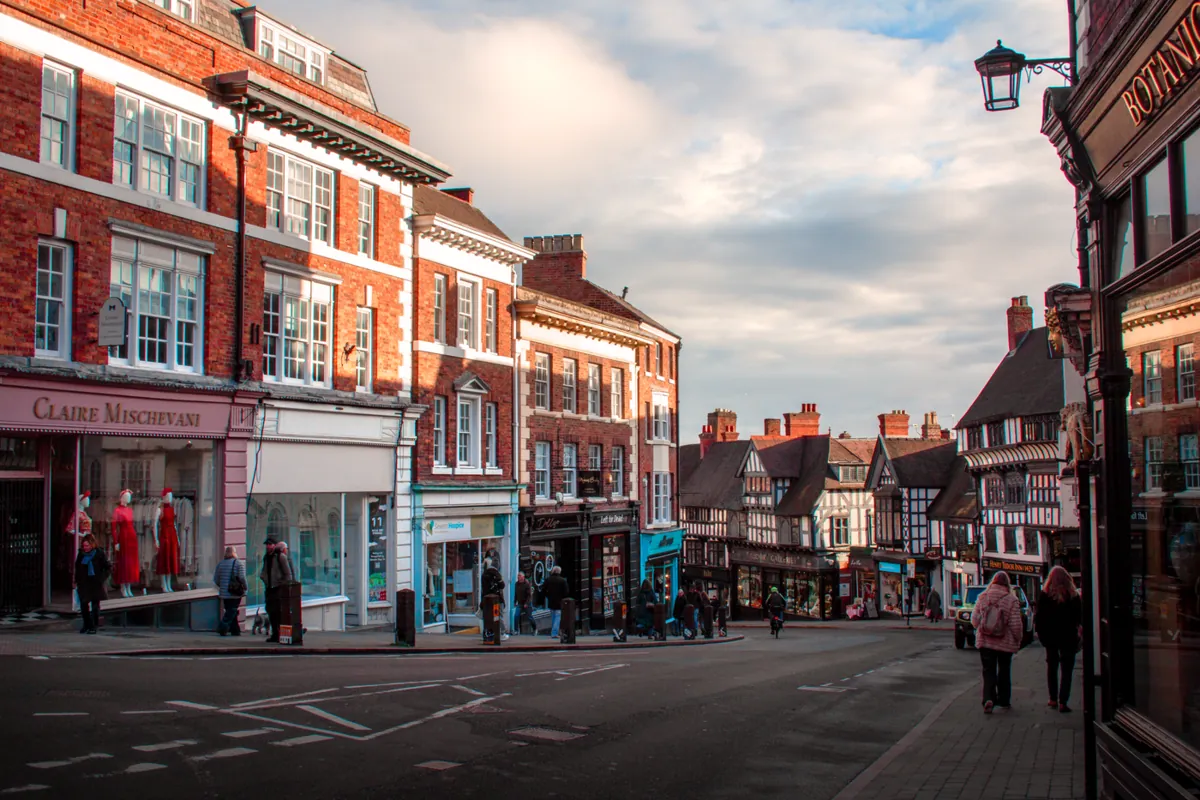
The England classes: B, C, E and F
In England, the live classes are in Schedule 1 (Parts B and C) and Schedule 2 (Parts A and B) of the Order. The old Part A (A1/A2/A3) and most of Part D (D1/D2) were swept into Class E and Class F on 1 September 2020, though cinemas, concert halls, bingo halls and dance halls became sui generis.
Class B - industrial and storage. In England, Class B1 (business) has been omitted because its contents moved into Class E(g). What remains is:
- Class B2 - general industrial: use for an industrial process other than one within Class E(g) (the light industrial uses suitable for a residential area).
- Class B8 - storage or distribution: use for storage or as a distribution centre.
Class C - residential. C1, C2, C2A and C4 are shared with Wales; the C3 dwellinghouse definition diverges between England and Wales - see the C3 note below:
- Class C1 - hotels: hotels, boarding houses and guest houses where no significant element of care is provided.
- Class C2 - residential institutions: residential accommodation with care, plus hospitals, nursing homes, residential schools, colleges and training centres.
- Class C2A - secure residential institutions: prisons, young offenders institutions, detention centres, secure training centres, custody centres, short-term holding centres, secure hospitals, secure local authority accommodation, military barracks.
- Class C3 - dwellinghouses: use as a dwellinghouse by a single person or household, by up to six residents living as a household with care, or by up to six residents without care (other than a Class C4 HMO). In England, C3 covers dwellinghouses "whether or not as a sole or main residence"; in Wales, C3 requires use "as a sole or main residence and occupied for more than 183 days in a calendar year", so a second home or holiday let is C3 in England but not C3 in Wales.
- Class C4 - houses in multiple occupation: use by up to six residents as an HMO (a "house in multiple occupation" as in section 254 of the Housing Act 2004).
England's residential classes are C1, C2, C2A, C3 and C4 only. There is no Class C5 or C6 in England - a second home or holiday let is simply C3. (Classes C5 and C6 are Welsh classes, covered in the Wales section below.)
Class E - commercial, business and service (England only, from 1 September 2020). Class E is the big merger. It pulls the old A1 (shops), A2 (financial and professional services), A3 (restaurants and cafes), B1 (business), D1 medical/nursery uses, and D2 indoor sport into one class:
- E(a) - display or retail sale of goods (other than hot food) to visiting members of the public.
- E(b) - sale of food and drink mostly consumed on the premises (restaurants, cafes).
- E(c) - financial services, professional services (other than health or medical), and similar services appropriate to a commercial, business or service locality.
- E(d) - indoor sport, recreation or fitness (not involving motorised vehicles or firearms), but not swimming pools or skating rinks (those are Class F.2, so a pool-to-office change is not a same-class change).
- E(e) - medical or health services to the public (except premises attached to the practitioner's residence).
- E(f) - creches, day nurseries and day centres (non-residential).
- E(g) - offices for operational or administrative functions, research and development of products or processes, and light industrial processes suitable for a residential area.
The practical effect is dramatic. A shop can become a cafe, a cafe can become a gym, a gym can become an office, and an office can become a light industrial unit, all without planning permission, because every one of those is Class E. Building regulations, licensing, and any planning conditions on the original permission still apply, and an Article 4 direction can remove the right in a given area.
Class F - local community and learning (England only). The remains of old D1 that did not go into Class E:
- Class F.1 - learning and non-residential institutions: education, display of works of art, museums, public libraries, public halls, places of worship, law courts.
- Class F.2 - local community: small shops up to 280 sqm mostly selling essential goods, including food, with no similar shop within 1,000 metres, local community halls or meeting places, outdoor sport or recreation areas, and local indoor or outdoor swimming pools or skating rinks.

Sui generis: uses that sit outside every class
Some uses are deliberately left out of every class. They are "sui generis" - in a class of their own. Article 3(6) of the Order lists them, and any material change to or from a sui generis use is development that needs planning permission.
The sui generis list includes the following. Some items are sui generis only in England; in Wales they remain within the use classes, as noted against each item:
- pubs, wine bars and drinking establishments (including "drinking establishments with expanded food provision") - sui generis in England only; in Wales pubs remain within Class A3;
- hot food takeaways, where consumption is mostly off the premises - sui generis in England only; in Wales hot food takeaways remain within Class A3;
- cinemas, concert halls, bingo halls, dance halls, and venues for live music performance - sui generis in England only; in Wales these remain within Class D2;
- theatres, amusement arcades or centres, and funfairs;
- night-clubs;
- casinos - sui generis in England only; in Wales casinos remain within Class D2;
- betting offices - sui generis in both England (from 2015) and Wales (from 2016);
- pay day loan shops - sui generis in both England (from 2015) and Wales (from 2016);
- sale of fuel for motor vehicles (petrol stations) and sale or display of motor vehicles (car showrooms);
- a taxi business or business for the hire of motor vehicles;
- scrapyards, and yards for the storage or distribution of minerals or the breaking of motor vehicles;
- launderettes;
- hostels;
- retail warehouse clubs;
- waste disposal installations for the incineration, chemical treatment, or landfill of hazardous waste.
A pub cannot become a hot food takeaway, and a takeaway cannot become a betting office, without permission, because both ends are sui generis. And a Class E shop cannot become a pub without permission, even though the shop end is within a class, because the destination is not.
Class MA: turning Class E space into homes
Class MA of Part 3 of the Town and Country Planning (General Permitted Development) (England) Order 2015 is the prior-approval route for converting Class E commercial, business and service premises to Class C3 dwellinghouses. It came into force on 1 August 2021, replacing the old Class O (office to residential) and Class PA (light industrial to residential), and superseding the retail and food part of Class M - all uses that had become Class E. Classes N (some sui generis uses to residential) and P (storage and distribution, Class B8, to residential) cover uses outside Class E and remain as separate permitted development rights.
What it permits. Development consisting of a change of use of a building (and any land within its curtilage) from a use within Class E to a use within Class C3 (dwellinghouses).
Conditions and prior approval. Before starting, the developer must apply to the local planning authority for a determination on whether prior approval is needed for:
- transport impacts of the development, particularly safe site access;
- contamination risks in relation to the building;
- flooding risks in relation to the building;
- impacts of noise from commercial premises on the intended occupiers of the development;
- where the building is in a conservation area and the change involves the whole or part of the ground floor, the impact on the character or sustainability of the conservation area;
- the provision of adequate natural light in all habitable rooms of the dwellinghouses;
- the impact on intended occupiers of introducing residential use in an area the authority considers important for general or heavy industry, waste management, storage and distribution, or a mix of such uses;
- where a registered nursery or a health centre maintained under section 2 or 3 of the National Health Service Act 2006 is being lost, the impact on the local provision of those services;
- where the fire risk condition is met (a building containing two or more dwellinghouses that satisfies the height condition in article 9A of the DMP Order 2015), the fire safety impacts on the intended occupants.
What stops you using it. Class MA is not permitted where:
- the building has not been used for one or more of the qualifying Class E uses (or the predecessor A1, A2, A3, B1, D1(a), D1(b), or D2(e) uses, other than use as an indoor swimming pool or skating rink) for a continuous period of at least two years before the prior-approval application;
- the site is on, or within the curtilage of, a Site of Special Scientific Interest, a listed building, a scheduled monument, a safety hazard area, or a military explosives storage area;
- the building is in an Area of Outstanding Natural Beauty (now a National Landscape), a section 41 Wildlife and Countryside Act area, the Broads, a National Park, or a World Heritage Site;
- the site is occupied under an agricultural tenancy, unless both landlord and tenant have given express consent.
Development must be completed within three years starting with the prior approval date, and the building must remain in C3 residential use (other than ancillary purposes). Because Class E exists only in England, Class MA is in practice an England-only route. The equivalent change of use in Wales needs a full application or a different permitted development right.
The Wales difference: A1, A2, A3, B1, D1, D2
Wales kept the pre-2020 structure. The Welsh Ministers did not adopt the 2020 amendments that created Class E and Class F, so the old A, B, C and D parts of Schedule 1 still apply. The Welsh classes are:
Part A - retail and services.
- Class A1 - shops: retail sale of goods (other than hot food), post offices, travel agencies, hairdressing, funeral directors, dry cleaning, display of goods for sale, hiring of domestic or personal goods.
- Class A2 - financial and professional services: banks, building societies, estate agents, employment agencies, professional and financial services provided principally to visiting members of the public. Betting offices and pay day loan shops are sui generis in Wales (since 2016), not A2.
- Class A3 - food and drink: restaurants, snack bars and cafes - sale of food or drink for consumption on the premises, or of hot food for consumption off the premises. In Wales, hot food takeaways are Class A3, not sui generis.
Part B - business and industrial.
- Class B1 - business: offices (other than A2), research and development, and light industrial use suitable for a residential area without detriment to amenity.
- Class B2 - general industrial: an industrial process other than one within B1.
- Class B8 - storage and distribution: use for storage or as a distribution centre.
Part C - residential: C1 hotels, C2 residential institutions, C2A secure residential institutions, and C4 small HMOs are shared with England. The C3 dwellinghouse definition diverges - England's C3 covers dwellinghouses "whether or not as a sole or main residence" (so a second home or holiday let is C3 in England), while Wales's C3 requires use "as a sole or main residence and occupied for more than 183 days in a calendar year" (so a second home or holiday let is not C3 in Wales). This is because Wales added two residential classes England does not have: Class C5 (a dwellinghouse not used as a sole or main residence, occupied for 183 days or fewer per year) and Class C6 (commercial short-term letting of a dwellinghouse for periods of 31 days or less), both introduced in 2022 to regulate second homes and holiday lets. England has neither C5 nor C6.
Part D - non-residential institutions and assembly/leisure.
- Class D1 - non-residential institutions: clinics, health centres, creches, day nurseries, day centres, schools, art galleries, museums, libraries, public halls, places of worship, law courts.
- Class D2 - assembly and leisure: cinemas, concert halls, bingo halls, casinos, dance halls, swimming baths, skating rinks, gymnasiums, other indoor or outdoor sport and recreation (not involving motorised vehicles or firearms).
The practical difference matters. In England, changing a shop (E(a)) to a cafe (E(b)) is not development, because both are Class E. In Wales, changing a shop (A1) to a cafe (A3) is a move between classes, so it can be development and can need planning permission. The same is true for a shop to an office (A1 to A2), or a restaurant to a gym (A3 to D2). If your site is in Wales, do not apply the England Class E logic to it - the routes are different.
Operative use: working out what your site's lawful use actually is
A change-of-use question always starts with the same step: what is the lawful use of the site right now? This is the "operative use". It is not always obvious. A building may have been used in several ways over the years, some permitted, some not; a single site can have more than one operative use (a shop with a flat above, a workshop with a showroom); and the use on the ground is not always the use that has planning status.
The operative use is established by a combination of:
- the actual use taking place on the land;
- any planning permissions that have been granted for the site, which may authorise a use different from what is physically there;
- any conditions on those permissions that restrict or remove permitted development rights;
- any certificate of lawful use that has been issued for the site.
Where there is doubt - for example, a use that has been running for many years without a permission, or a mixed-use site where the classes have blurred - the clean answer is to apply for a Lawful Development Certificate (Existing Use) under section 191 of the Town and Country Planning Act 1990. The certificate is the council's formal confirmation of what the lawful use is, and it is the best foundation for any change-of-use argument you build on top of it.
Checking your change-of-use route
Once you know the operative use, the route is mechanical:
- Identify the current use class (or classes) of the site.
- Identify the proposed use class, or whether the destination is sui generis.
- If they are the same class, the change is not development - no permission is needed, subject to any planning condition removing the right. (A same-class change is an exemption from the definition of development, not a permitted development right, so an Article 4 direction cannot remove it - only a condition on the original permission can.)
- If they are different classes, or the destination is sui generis, the change may be development - check whether the GPDO grants a permitted development right (such as Class MA) that covers it, and whether any Article 4 direction or condition has removed that right.
- If there is no permitted development right, a full planning application for a change of use is needed - see outline vs full planning permission for the application shape.
That is the full decision tree, and it is exactly the kind of check GapSense runs against the Use Classes Order and the GPDO. The trap is usually step 1: people assume the use class from what they see, without checking the permission history or an LDC, and then build a change-of-use argument on the wrong starting point.
Disclaimer: this guide is general information, not legal or planning advice, and reading it does not create any professional relationship. Planning law and national policy change, and vary between England and Wales. Always confirm the current position with the relevant legislation, your local planning authority, or a qualified planning consultant before making a decision.
Sources: the Town and Country Planning (Use Classes) Order 1987 (as amended, including the 2020 Class E and Class F amendments for England, and the 2016 and 2022 Welsh amendments), the Town and Country Planning (General Permitted Development) (England) Order 2015 (Class MA, Part 3), and the Use Classes Order as retained and amended for Wales. Class details reflect the consolidated legislation as at July 2026; always check the live legislation and your council's local position.
Check your change-of-use route.
GapSense reads the Use Classes Order and the prior-approval rules, and tells you whether your change of use needs permission - and the cleanest route if it does. No card needed.